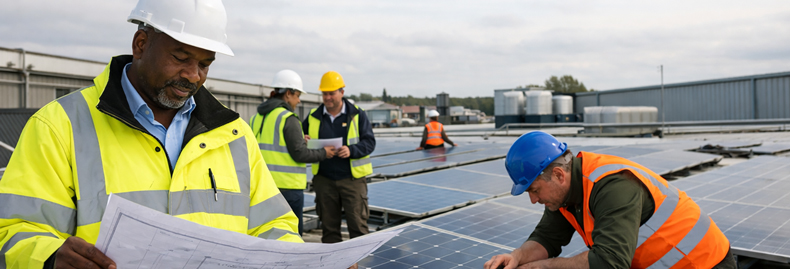
Why the roof is examined first
The roof supports the system, but it also continues to protect everything beneath it. Before panels are installed, attention usually turns to whether the structure can take additional load and how it will behave over time. This is not about assuming a problem, it is about removing uncertainty early.
Load capacity and structural limits
Solar equipment adds weight, distributed across rails, fixings, and support systems. On newer steel-framed buildings this may fall within expected limits. On older roofs, or those with lightweight construction, it often requires closer inspection. Insurers typically look for confirmation that loading has been properly assessed rather than assumed.
Wind uplift and system behaviour
Wind can create uplift forces that act on both the panels and the roof itself. These forces vary depending on location, height, and exposure. The way panels are fixed plays a significant role in how these forces are transferred into the structure, which is why fixing methods are considered carefully rather than treated as standard.
Roof condition and remaining life
A roof that is nearing the end of its service life may still carry panels, but it can introduce complications later. Repairs or replacement work may require removal of the system, which affects both cost and continuity. Surface condition, previous repairs, and general ageing are usually reviewed alongside structural strength.
Water ingress and detailing
Where fixings pass through the roof covering, the quality of detailing becomes important. Even systems designed to avoid penetration still rely on correct installation at edges and interfaces. From an insurance perspective, attention tends to focus on workmanship and long-term weatherproofing rather than the panels themselves.
Responsibility if issues arise
If a problem develops later, such as a leak or structural movement, the question often turns to cause. It may relate to the original roof, the installation, or general wear over time. Having a clear record of the roof condition and installation approach at the outset helps reduce uncertainty if these questions arise.
How these points are usually addressed
These risks are normally managed through assessment rather than avoided altogether. Structural checks, condition surveys, and appropriate system design bring the picture together. On larger commercial buildings, roof structure is typically reviewed alongside electrical and operational factors so that decisions reflect the building as a whole.