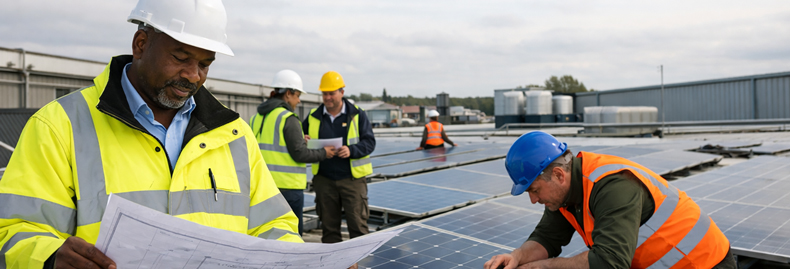
Why installation introduces its own risks
The installation stage is often the most active part of a solar project. Materials are moved, equipment is lifted into place, and work is carried out at height while the building may still be in use. These are familiar construction conditions, but they need careful coordination when taking place on an operational site.
From an insurance perspective, this phase is looked at separately from the finished system. The question is how the work is planned, managed, and controlled rather than whether the installation itself is appropriate.
Working at height and roof access
Access to the roof is a central part of the installation process. This may involve ladders, fixed access points, scaffolding, or temporary edge protection. The nature of the roof, whether flat or pitched, also affects how work is carried out.
Fall protection systems, safe working zones, and supervision all come into consideration. These are standard practices, but they become more important where large roof areas are involved or where work is taking place over active operations below.
Lifting operations and material handling
Solar panels, mounting frames, and associated equipment need to be transported to roof level. On larger buildings, this is often done using cranes or mechanical lifting equipment. On smaller sites, hoists or controlled manual handling may be used.
Lifting operations introduce risks around positioning, load control, and interaction with people or vehicles below. Planning the lift, managing exclusion zones, and coordinating timing with site activity all form part of how these risks are managed.
Temporary changes to the building fabric
During installation, parts of the roof may be accessed, opened, or modified. Even where non-penetrating systems are used, movement across the roof surface can affect coverings and finishes.
Weather exposure is another factor. Work may be phased to minimise the time any area is disturbed, but short periods of increased vulnerability can still occur. This is why sequencing of work and weather awareness are usually built into planning.
Interaction with ongoing site activity
Many commercial installations take place while the building continues to operate. Warehouses may still be loading and unloading goods, factories may be running production lines, and offices remain occupied.
This creates a shared environment where installation teams and site staff work alongside each other. Traffic routes, pedestrian access, and safety zones need to be clearly defined to avoid conflict between activities.
Contractor competence and coordination
Solar installation is typically carried out by specialist contractors, often working alongside other trades or site teams. Clear coordination is important so that responsibilities are understood at each stage.
Insurers often focus on contractor experience, method statements, and risk assessments. The emphasis is on how work is organised and controlled rather than the presence of risk itself.
Risk of accidental damage
During installation there is a possibility of unintended damage to the roof surface, plant equipment, or surrounding structures. This can arise from movement of materials, tools, or access equipment.
These risks are usually managed through supervision, defined working areas, and careful handling, but they remain part of the overall picture during the installation phase.
Short-term disruption and downtime considerations
While full shutdowns are not always required, some disruption may occur. Access restrictions, temporary isolation of systems, or changes to working patterns may be needed while installation is underway.
Planning around business activity helps reduce impact, particularly on sites with tight operational schedules or continuous processes.
How installation risks are typically managed
Installation risks are generally addressed through established construction practices. Risk assessments, method statements, supervision, and clear communication between contractors and site operators form the basis of how work is controlled.
When these are in place, installation can proceed in a structured way that limits disruption and keeps risk within expected bounds for commercial building work.